AI Code Editors Ship Fast. Clients Still Can't Edit.
Cursor and Windsurf help developers build static sites in hours. But post-launch content editing is still completely unsolved. Here's why that gap keeps widening.
Cursor and Windsurf have genuinely changed how fast a static site gets built. What used to take a week of scaffolding and component wiring now takes an afternoon. Developers describe shipping full Astro or Next.js projects in a single session, with clean code, good structure, and zero boilerplate drag. The build side of the equation has never been faster.
The launch side, though, looks exactly the same as it did five years ago. The client gets a beautiful site, asks how to update the hero copy or swap out a team photo, and the developer is suddenly back in the project. There is no AI editor that solves this part. Cursor doesn’t ship a content editing interface. Windsurf doesn’t know who your client is or what they’re allowed to touch. The tools that accelerate build time have no opinion whatsoever about what happens after git push.
The Gap Is Getting Wider, Not Smaller
The faster developers can ship, the more sites they’re taking on. That’s a reasonable consequence of better tooling. But each new site is another client relationship that eventually needs a content update, a copy tweak, or a new page. Multiply that across a small agency’s client list and you have a growing backlog of “quick edits” that aren’t quick because they require a developer to touch the repo directly.
The traditional answer here is to bolt on a CMS. But that introduces a database, a hosting dependency, a separate admin interface, and often a rebuild of the content model from scratch. For a site that was built in an afternoon with an AI editor, that overhead feels absurd. Developers end up choosing between two bad options: stay the bottleneck forever, or introduce infrastructure complexity that outweighs the original project.
What a Thin Editing Layer Actually Looks Like
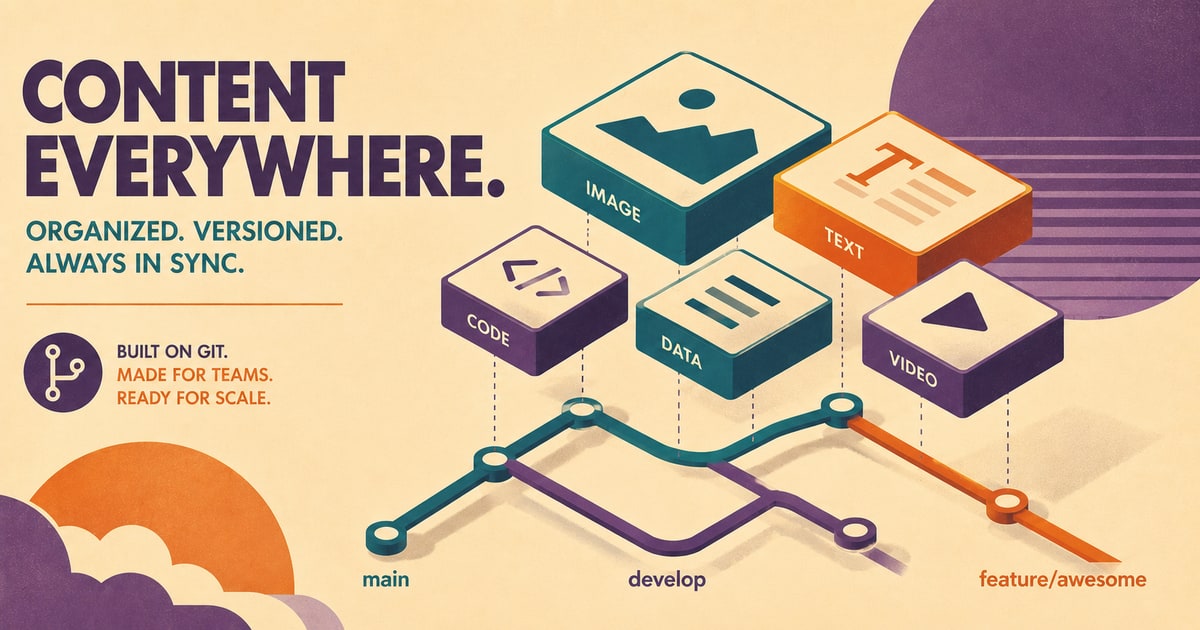
The right abstraction isn’t a full CMS. It’s a thin layer that sits between the client and the Git repository, lets them edit content safely, and commits the changes without anyone writing a migration script or provisioning a Postgres instance. That’s the specific gap that Mergeline addresses. Developers keep their Astro or Next.js setup exactly as it is. The AI editor they used to build the site stays in the workflow. Clients get a clean interface scoped to the content they’re supposed to touch, and every change lands in version control like any other commit.
This matters more now because the sites being built with AI editors are often structurally clean but content-light. They’re scaffolded fast, which means the content model is sometimes an afterthought. A Git-backed editing layer doesn’t demand that the developer pre-architect a content schema before handing things off. It works with what’s already in the repository.
The build side of web development is going to keep accelerating. AI editors will get faster, prompts will get better, and the gap between “idea” and “deployed site” will keep shrinking. The handoff problem isn’t going anywhere on its own, and it doesn’t get easier just because the site was built quickly. If anything, faster builds mean more sites that need a sustainable editing workflow sooner. The developers who think about that before launch will spend a lot less time on support after it.